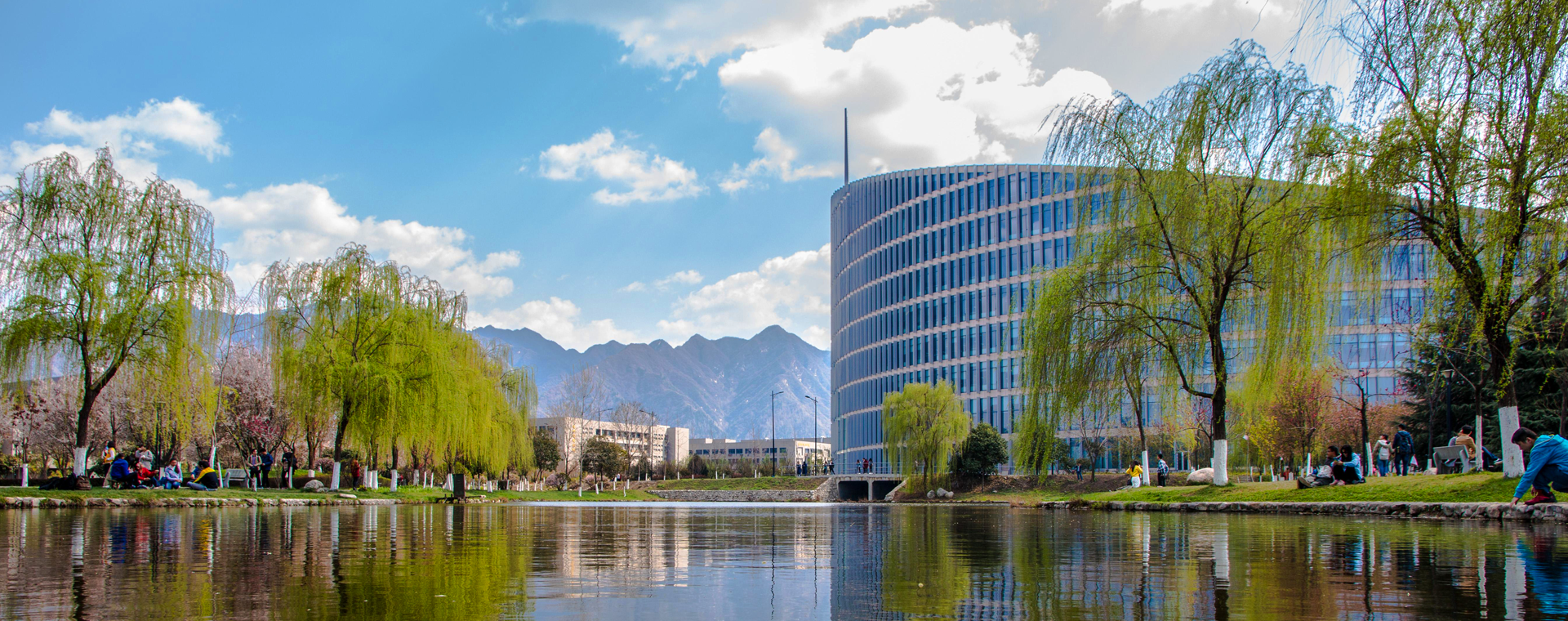
From 16 to 17 December 2025, the China-EU Youth Dialogue on Civilizations, guided by the China-Europe Association and hosted by Northwestern Polytechnical University (NPU), was successfully held in Xi'an. During the event, the School of Mathematics and Statistics and the School of Chemistry and Chemical Engineering of NPU co-organized the "Digital Governance for People's Well-being" Sub-forum. More than 60 faculty and student representatives from 6 European universities, including the University of Cambridge, the University of Manchester, the University of Palermo, the Autonomous University of Madrid, Corvinus University of Budapest, and the University of Wrocław, as well as 6 domestic institutions of higher learning such as Tsinghua University, Sichuan University, Nanjing University of Science and Technology, Northwest University, University of Electronic Science and Technology of China, and Xi'an International Studies University, gathered together to conduct in-depth discussions and cross-civilization dialogues centering on the core theme of "Digital Governance for People's Well-being".

On the morning of 16 December, the opening ceremony of the conference was grandly held at the Tang West Market Hotel. Song Baowei, President of Northwestern Polytechnical University and Member of the Chinese Academy of Engineering; Song Jingwu, Vice President and Secretary-General of the China-Europe Association; Gilles Boyer, Former Member of the European Parliament; Zheng Kai, Second-Class Inspector of the Department of International Cooperation, Ministry of Industry and Information Technology; and Gao Jinxiao, Deputy Director of the Foreign Affairs Office of Shaanxi Provincial People's Government, attended the ceremony and delivered speeches.

In the roundtable session of the opening ceremony, Antonina Pirrotta, Dean of the Doctoral School of the University of Palermo, who was specially invited by the organizing schools, delivered a keynote speech on "Empowering Cultural Heritage Protection with Digital Technologies". She also showcased via video how engineering algorithms and data modeling can minimize damage to cultural heritage in seismic disasters, providing a vivid case for the "people-centric" practice of digital governance.

The "Digital Governance for People's Well-being" Sub-forum was led by Professor Zhang Ying, Deputy Party Secretary of the School of Mathematics and Statistics; Professor Xiao Manyu, Director of the Office of International Cooperation and Exchange; and Professor Tian Wei, Vice Dean of the School of Chemistry and Chemical Engineering, with Li Zhuorong and Gao Shanshan, Foreign Affairs Secretaries, responsible for overall coordination. Federico Piccolo from the University of Palermo, together with Wang Siyu and Lai Yanzhou from Northwestern Polytechnical University, served as co-chairs of the sub-forum.

From the afternoon of 16 December to the morning of 17 December, the sub-forum was held in Conference Room C205, East Building, Youyi Campus of Northwestern Polytechnical University. Adopting a structured mode of "Situation Analysis — Joint Solution Co-creation", the forum was divided into two sections: "Current Status and Challenges" and "Solutions and Consensus Building". Chinese and European youth were divided into mixed groups to conduct four rounds of intensive interactive dialogues around four core topics: Data Privacy Protection, Digital Inclusion and Equity, Ethical Governance of Artificial Intelligence, and Synergy between Digital and Green Transition.

After each round of discussion, each group selected representatives to give thematic presentations. In the end, the forum issued a joint call for establishing a China-EU cooperation framework for digital governance featuring "people-centeredness, joint risk prevention, and mutual recognition of standards", and reached a core consensus on "empowering people's livelihoods with technology and addressing digital challenges through collaboration".
To recognize the active participation and outstanding performance of Chinese and European youth, the forum set up an award ceremony. After voting by all participants, one Best Presentation Award, one Most Popular Award, two Outstanding Presentation Awards, two Youth Leadership Awards, two Outstanding Demeanor Awards and one Most Promising Award were finally presented.
The successful holding of the "Digital Governance for People's Well-being" Sub-forum has not only provided youth-oriented solutions for China-EU cooperation in digital governance, but also built a long-term cross-civilization and interdisciplinary communication bridge. Chinese and European youth have deepened mutual understanding through policy comparison, fostered trust through technical discussions, and strengthened friendship through cultural exchanges, injecting youthful momentum into the global practice of "people-centered" digital governance.
Going forward, the School of Mathematics and Statistics and the School of Chemistry and Chemical Engineering will continue to rely on the university's "One-Ten-Hundred-Thousand" internationalization strategy, deepen cooperation with European universities in fields such as digital governance and data science, build more high-level international dialogue platforms, promote the in-depth integration of digital technologies and livelihood services, and empower the cultivation of digital governance talents with international perspectives, technical rationality and humanistic care.
Text & Images | Xiao Manyu, Li Zhuorong, Gao Shanshan
Reviewers | Zhang Ying, Tian Wei

 Home Page
 OA
OA 中文
中文 Search